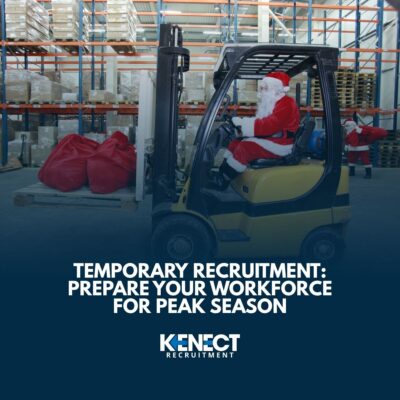
Black Friday, Christmas and seasonal promotions bring increased orders and new contracts for many businesses. However, peak season often means more demand than staff to handle it. Waiting to recruit until your existing workforce is already stretched thin can exacerbate the problem. Temporary recruitment offers a solution. A well-planned temporary workforce provides businesses the flexibility to boost staffing during peak times without increasing permanent staff. Successful peak-season recruitment begins well in advance.
Here’s how to prepare.
What Is Peak Season Recruitment?
Peak season recruitment involves boosting your workforce before anticipated periods of higher demand. The timing of peak season varies by industry. For example retailers and ecommerce businesses often see increased demand around Black Friday and Christmas while logistics, transport warehousing and manufacturing businesses experience seasonal peaks throughout the year.
Businesses may suddenly need:
- More warehouse operatives
- Additional pickers and packers
- HGV and delivery drivers
- Production workers
- Administrative support
- Customer service staff
- Additional shift coverage
Recruiting temporary workers allows businesses to increase capacity during these periods and adjust staffing levels as demand changes.
Why Is Workforce Planning Important Before Peak Season?
A major mistake businesses make is waiting until they’re already busy to start recruiting. Imagine orders are increasing overtime is piling up and your team is already at capacity. Suddenly you need another 10, 20 or even 50 people. And so does everyone else. During peak seasons businesses in the same area often compete for the same pool of available workers. Starting recruitment earlier gives you more time to identify your needs, find suitable candidates and prepare them before demand peaks.
Peak-season recruitment should be proactive, not reactive.
1. Look at Previous Peak Seasons
Start with what you already know.
Review previous busy periods and ask:
- When did demand begin increasing?
- How many additional workers did we need?
- Which departments struggled most?
- Where did overtime increase?
- Were shifts difficult to fill?
- Did absence create problems?
- When did we begin recruiting?
- Did we recruit early enough?
Historical information can provide a useful starting point for predicting your next staffing requirement.
If you needed 20 additional warehouse workers last Christmas, for example, don’t wait until December to begin thinking about those positions again.
2. Forecast Your Staffing Requirements
Having analysed past demand, look ahead and consider expected orders contracts production levels delivery volumes and customer demand. Then compare these requirements to your current workforce. You might find some areas need significantly more staff than others.
For example, increased orders could require additional:
Warehouse staff to pick and pack products.
Drivers to transport and deliver them.
Commercial staff to manage administration and customer enquiries.
Looking at the entire operation can help identify potential bottlenecks before they develop.
3. Decide Which Roles Need Temporary Workers
Not every increase in workload requires another permanent employee. If demand is expected to rise temporarily before returning to normal levels, temporary recruitment can provide additional capacity during that period.
Temporary workers can be particularly useful for:
- Seasonal peaks
- Increased order volumes
- Short-term contracts
- Holiday cover
- Employee absence
- Additional shifts
- Unexpected increases in demand
The important thing is identifying where temporary workers will have the greatest impact.
Don’t simply ask, “How many people do we need?”
Ask: “Where will additional people remove the most pressure from our operation?”
4. Start Recruiting Earlier Than You Think
During peak season, qualified candidates might have several job offers. This competition arises when numerous businesses simultaneously seek temporary warehouse workers and drivers. Early recruitment allows you a wider window to find suitable candidates.
It also provides more time for any necessary:
- Interviews
- Right-to-work checks
- Licence or qualification checks
- Inductions
- Training
- Shift planning
- Onboarding
The objective should be to have people ready before they’re desperately needed.
5. Make Your Vacancies Competitive
Peak-season recruitment isn’t just about finding candidates; you also need them to choose you. Consider your vacancies from the applicant’s perspective. Are the pay details clear? Are shift times explained? Is the location obvious? Do candidates understand the potential duration of the assignment? Does the advert accurately describe the job? Clear job information helps candidates assess whether an opportunity suits them before applying. This reduces unsuitable applications and streamlines the recruitment process.
6. Consider Your Shift Patterns
Increasing the workforce isn’t always the only solution. Sometimes existing shift structures also need a review. Consider whether your current working patterns can accommodate increased demand.
You may need additional:
- Morning shifts
- Afternoon shifts
- Night shifts
- Weekend coverage
- Flexible workers
- Holiday cover
Knowing this beforehand allows your recruitment partner to search for candidates whose availability truly aligns with your operations. It’s pointless to find 20 suitable candidates if none can work the required shifts.
7. Don’t Forget About Your Existing Workforce
Peak season doesn’t simply mean asking your existing team to work harder. Extended overtime and increased workloads can put extra pressure on employees. Temporary workers can help distribute this workload more evenly across a larger team. However, successful integration is crucial.
Temporary employees should understand:
- Their responsibilities
- Shift expectations
- Health and safety procedures
- Who they report to
- Workplace processes
- Performance expectations
A clear induction can help temporary workers become productive members of the operation more quickly.
8. Build a Reliable Pool of Temporary Workers
Planning temporary recruitment effectively offers a significant advantage: the chance to identify workers you’d welcome back. Someone familiar with your workplace processes and expectations will likely need less time to adjust for another assignment. Over time, businesses can build a reliable pool of temporary staff who understand their operations, simplifying future peak periods. Your recruitment agency can play a crucial role in maintaining these relationships between assignments.
9. Communicate With Your Recruitment Partner
A recruitment agency’s plans are limited by the information it has. Don’t wait until you need 30 workers on Monday morning to start talking. Instead, discuss anticipated demand with your recruiter early on.
Share information such as:
- Expected peak dates
- Estimated worker numbers
- Required roles
- Shift patterns
- Required experience
- Pay rates
- Assignment duration
- Potential changes in demand
Requirements might change as peak season approaches. That’s perfectly fine. The key is maintaining communication. This is where the difference between a recruitment provider and a recruitment partner truly shines. A provider simply reacts to your order. A recruitment partner anticipates your needs and helps you prepare accordingly.
10. Have a Plan for When Peak Season Ends
Temporary workforce planning should extend beyond recruitment. It’s also important to consider what happens when demand returns to normal. Some temporary assignments will naturally conclude, but peak season can also present an opportunity for employers to identify valuable workers who might be suitable for future roles or permanent positions.
Where appropriate, keep track of temporary workers who:
- Consistently perform well
- Have strong attendance
- Work effectively with the existing team
- Learn quickly
- Demonstrate a positive attitude
Today’s temporary worker could potentially become tomorrow’s permanent employee.
Temporary Recruitment Across Transport, Warehouse & Commercial
Peak demand rarely affects just one part of a business. At Kenect Recruitment, we support employers across key areas including:
Transport Recruitment
From van and 7.5 tonne drivers to Class 1 and Class 2 HGV drivers, additional transport workers can help businesses respond to increased delivery and distribution requirements.
Warehouse & Industrial Recruitment
Warehouse operatives, pickers, packers, forklift drivers and production workers can provide additional capacity when order volumes increase.
Commercial Recruitment
Increased business activity can also create greater demand for administration, customer service and other commercial support roles.
Taking a wider view of workforce requirements can help businesses identify pressure points throughout their operation.
Don’t Wait for Peak Season to Become a Recruitment Problem
Peak season is often predictable so your workforce strategy should be too. By understanding your requirements early you’ll have more time to find suitable workers organise shifts and prepare your operation for increased demand.
Temporary recruitment gives businesses the flexibility to scale their workforce when they need additional support without automatically committing to permanent headcount.
But the biggest advantage comes from planning early.
At Kenect Recruitment, we work with businesses to understand upcoming staffing requirements and build recruitment solutions around them.
Expecting a busy period? Speak to Kenect Recruitment today about your temporary staffing requirements and start preparing your workforce before the peak arrives.