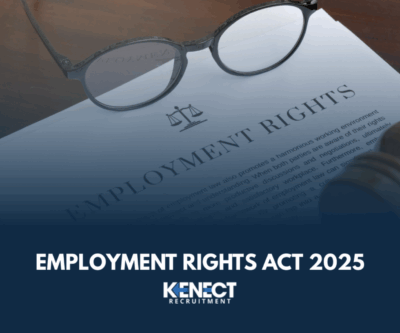
On 18 December 2025, Parliament granted Royal Assent to the Employment Rights Bill, enacting it as the Employment Rights Act 2025.
This Act introduces a series of additions and amendments to existing employment legislation, including updates to the Employment Rights Act 1996.
The Act will roll out changes over two years, with most taking effect in 2026 and 2027. Although most employment law changes have not yet taken effect, many will come into force from April 2026.
Read on to find out more about how these changes could affect you going forward.
Already in effect
Minimum service level rules for strikes
Minimum service level rules for strikes were removed immediately after the Bill became law, which refers to the rule of continuing services in the event of a strike. The date of this change was 18 December 2025.
Employee impact: Employees participating in strikes are no longer restricted by minimum service requirements, allowing for greater flexibility during industrial action.
February 2026 updates
February 2026 marks 2 months after the Bill became law, and it will come with the following changes.
Increased dismissal protection for industrial action
It will become ‘automatically unfair’ to be dismissed for taking part in industrial action. From February 2026, the existing 12-week time limit for bringing an unfair dismissal claim will no longer apply.
Employee impact: Employees will have stronger protections if they participate in strikes, and a longer window to make unfair dismissal claims.
Trade union activity
The following changes will be put into place from February 2026 to trade union activity:
- Employers and unions will need to provide 10 days’ notice of industrial action (down from 14)
- A simple majority vote for industrial action will be needed for unions
- Picket supervisors will no longer be required
- Industrial action mandates will last for 12 months rather than the current 6 months
- Industrial action and ballot notices will be simplified
- Political fund rules will change
Employee impact: Union members will be able to participate in industrial action more easily, with simpler procedures and longer mandates.
April 2026 updates
There will be additional employment law changes that will come into effect from April 2026, which are listed below.
Paternity leave and unpaid parental leave
Paternity leave will become a ‘day one right’. This will allow somebody to give notice of leave from the first day of their employment; currently, somebody must have worked for their employer for 26 weeks to become eligible.
Ordinary parental leave will also become a day-one right. Currently, someone must have worked for their employer for 1 year before they are deemed eligible.
The restriction on taking paternity leave after shared parental leave will be removed.
Employee impact: New parents will be able to access leave from the start of their employment, making it easier to plan time off without waiting periods.
Sick pay
Statutory sick pay (SSP) will be payable from the first day of illness, rather than from the fourth day.
The government will abolish the lower earnings limit, so workers will no longer need to meet a minimum earnings threshold to qualify for statutory sick pay.
Employee impact: Employees will be able to receive SSP immediately, regardless of earnings.
Whistleblowing protections for sexual harassment
Sexual harassment will become a qualifying disclosure under the whistleblowing law. Whistleblowers reporting harassment will be protected from detriment and unfair dismissal.
Employee impact: Employees reporting harassment will have legal protections and will be able to do so without fear of retaliation.
Collective redundancy protective award
The maximum protective award for failing to consult during collective redundancy processes will increase from 90 days’ pay to 180 days’ pay.
Employee impact: Employees involved in redundancy consultations will have stronger financial protection if consultation rules are not followed.
Fair Work Agency
From April 2026, the government will establish the Fair Work Agency to consolidate existing enforcement bodies and enforce additional employment rights, including holiday pay and statutory sick pay.
Employee impact: Employees can expect clearer enforcement of their employment rights through a single agency.
Gender pay gap and menopause action plans
From April 2026, it will be voluntary for employers to create action plans focused on menopause and gender pay gaps. This will become mandatory sometime in 2027.
Employee impact: Employees may benefit from employer-led initiatives to address gender pay gaps and support menopause-related needs.
Additional trade union changes
From April 2026, the Act will introduce additional trade union changes, including simplifying how trade unions gain workplace recognition and allowing members to vote electronically.
Employee impact: Union members will be able to participate more easily in workplace decisions and elections.
Looking ahead: October 2026 onwards
From October 2026, the Employment Rights Act 2025 will introduce a wider range of changes, although government consultations will determine how these changes take effect.
The topics that will be subject to alterations include:
- Harassment
- Dismissal and rehire
- Employment tribunal time limits
- Tipping law
- Increased protection against detriment for industrial action
- Public sector outsourcing ‘two-tier code’
- New Adult Social Care Negotiating Body
- Additional changes to trade union rules
Get involved
The government is currently consulting on specific parts of the Act as part of the Make Work Pay initiative. They are inviting feedback from anyone affected, including employers, employees, and trade unions.
You can view the latest consultations here: https://www.gov.uk/government/collections/make-work-pay
Source: Acas – Employment Rights Bill
Explore Kenect’s website, where you will be able to see how we work in line with the new Employment Rights Act 2025.